Medical Virtual Assistant Services:
What Do They Handle?
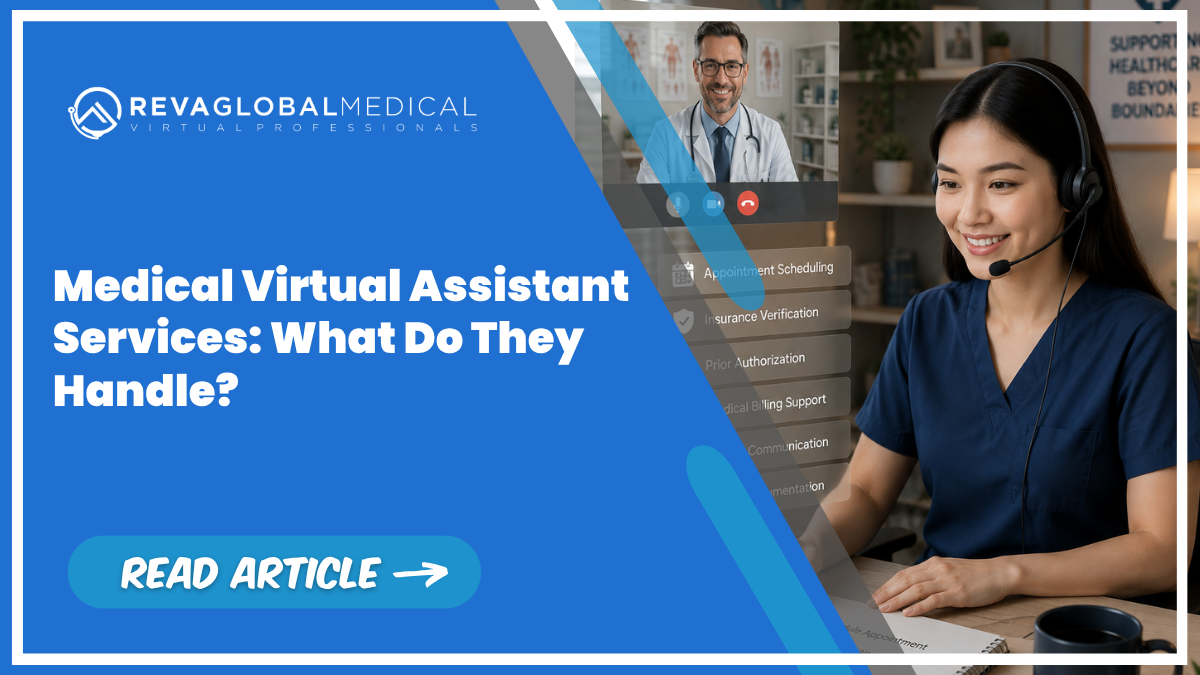
See What Your Practice Can Delegate
Medical Virtual Professional (MVP) services can help practices move repetitive administrative work away from already stretched teams. For many U.S. healthcare practices, the challenge is not a lack of work—it is having enough qualified people to keep up with it. In 2026, 84% of medical groups reported higher year-to-date operating costs than the same period in 2025, with labor costs among the primary pressures. (MGMA) The bigger question is which tasks can be handled by dedicated remote healthcare professionals without disrupting patient care.
What Do Medical Virtual Professional Services Include?
Medical virtual professional services are designed around the administrative and operational needs of healthcare practices.
The goal is not simply to add another person to the workflow. It is to move appropriate, repeatable tasks to a dedicated Medical Virtual Professional (MVP) so that in-office staff can focus on work that requires their physical presence or direct patient interaction.
Depending on the practice, an MVP can support front-office, administrative, patient-access, and revenue-cycle workflows. The specific responsibilities should always match the practice’s processes, systems, and staffing needs.
For practices considering REVA Global Medical, the focus is on providing dedicated Medical Virtual Professionals who integrate into U.S. healthcare workflows.
7 Tasks Practices Can Delegate
The most valuable medical virtual professional tasks are often the ones that consume staff time without requiring someone to be physically present in the office.
1. Appointment Scheduling
Scheduling can involve more than simply placing an appointment on a calendar.
An MVP can help coordinate appointments, manage scheduling requests, follow up on changes, and maintain organized appointment workflows based on the practice’s established procedures.
This can be especially useful for practices dealing with high call volumes or frequent schedule changes.
2. Patient Intake and Administrative Support
Patient intake involves multiple administrative steps before a visit takes place.
An MVP can support processes such as collecting required information, organizing forms, reviewing administrative details, and ensuring information reaches the appropriate team according to established workflows.
The objective is simple: reduce unnecessary administrative back-and-forth before the patient reaches the provider.
3. Insurance Verification and Eligibility
Insurance-related administrative work can consume significant staff time.
Eligibility verification, payer information, and related administrative follow-up can require repeated checks and documentation.
An MVP can support these workflows based on the practice’s procedures, helping staff keep information organized and reducing repetitive manual work.
4. Prior Authorization Support
Prior authorization remains a major administrative burden for healthcare organizations.
MGMA reported in 2026 that prior authorization was among the leading regulatory issues diverting practice resources away from patient care. (MGMA)
An MVP can assist with administrative portions of the process, including gathering information, tracking requests, organizing documentation, and following up according to established procedures.
5. Medical Billing Support
Billing workflows can involve a long list of repetitive administrative activities.
Depending on the practice’s needs, an MVP may support claim follow-up, payment-related administrative tasks, documentation organization, and other revenue-cycle processes.
The goal is to help the internal team keep work moving rather than allowing routine follow-up to accumulate.
6. Patient Communication
Patients often contact practices for information that requires timely administrative attention.
An MVP can support appropriate non-clinical communications, appointment-related follow-ups, administrative questions, and other communication workflows defined by the practice.
Clinical questions and decisions should remain with appropriately qualified healthcare personnel.
7. EHR and Documentation Support
Healthcare teams spend significant time working inside electronic health record systems.
An MVP can support administrative EHR workflows such as updating information, organizing records, processing assigned tasks, and maintaining administrative documentation according to the practice’s established procedures.
The exact scope should be determined by the practice and the MVP’s training and authorization.
Why These Tasks Matter in 2026
Administrative workload is not getting smaller.
MGMA reported that 84% of medical groups saw higher year-to-date operating costs in 2026 compared with 2025. Among practices reporting increases, the average increase was approximately 11%, with labor-related costs among the main contributors. (MGMA)
At the same time, practices continue to face pressure around access and staff workload. In an MGMA survey, staff phone work was concentrated in eligibility and prior authorization (45%), scheduling (31%), intake (9%), prescription refills (6%), and other activities (9%). (MGMA)
That matters because many of these workflows involve repeatable administrative work.
Instead of asking an already-busy employee to handle every task, practices can evaluate which responsibilities require an in-office presence and which can be supported remotely.
That distinction can create a more practical staffing model.
When Should Your Practice Consider Remote Support?
Not every practice needs the same level of support.
However, several signs can indicate that it is time to evaluate additional administrative capacity.
Your staff is constantly catching up.
If routine tasks continue moving from one day to the next, the problem may be capacity rather than productivity.
Your phones are overwhelming the front desk.
Scheduling, eligibility, prior authorization, and other administrative calls can quickly consume staff hours. (MGMA)
Providers are getting pulled into administrative work.
When physicians spend time addressing tasks that could be handled elsewhere in the workflow, valuable clinical capacity can be affected.
You are hesitant to add another full-time position.
Hiring another in-office employee may not be the only option. A dedicated remote professional can provide another way to add administrative capacity.
Your practice is growing.
More patients can mean more scheduling, intake, insurance, documentation, billing, and follow-up work. Scaling administrative support alongside patient volume can help prevent operational bottlenecks.
The right remote support can give your team more capacity without adding more administrative chaos.
Streamline your practice with a Medical Virtual Professional
What Should You Look for in a Medical Support Partner?
Choosing support should involve more than finding someone who can complete administrative tasks.
Healthcare practices handle sensitive information and operate within highly specific workflows. The person supporting your practice needs to understand the environment, follow established processes, and work within clearly defined responsibilities.
Look for a partner that can provide:
Healthcare workflow familiarity
The support professional should understand the structure and pace of a medical practice.
Clear role definition
Your practice should know exactly which responsibilities the MVP will handle and which remain with the internal team.
Consistent communication
Remote support works best when responsibilities, priorities, and escalation procedures are clear.
Appropriate training
Training should align with the practice’s systems, workflows, and assigned responsibilities.
Security-conscious processes
Healthcare administrative support requires appropriate safeguards when handling protected health information.
Scalability
Your support model should be able to change as your practice’s workload changes.
For practices evaluating whether this model fits their needs, REVA Global Medical’s FAQ provides additional information about its Medical Virtual Professional model.
Why Delegating the Right Work Matters
The objective is not to delegate everything.
It is to delegate the right things.
Tasks that are repetitive, administrative, process-driven, and capable of being performed remotely are often good candidates for support.
Tasks requiring direct physical presence, clinical judgment, or responsibilities outside the MVP’s defined role should remain with the appropriate in-office or licensed team members.
This distinction is what makes remote support more strategic.
The practice keeps control of its workflows while giving its internal team more room to focus on patient care, clinical responsibilities, and higher-value work.
How REVA Global Medical Helps U.S. Practices With Administrative Work
REVA Global Medical provides dedicated Medical Virtual Professionals to support administrative workflows for U.S. healthcare practices.
Depending on your practice’s needs, an MVP can support areas such as:
- Patient Scheduling — Assist with appointment coordination, scheduling requests, and related administrative follow-up.
- Patient Intake — Support administrative intake processes and organize information according to established practice workflows.
- Insurance Verification — Help with eligibility and insurance-related administrative tasks.
- Prior Authorization Support — Assist with administrative tracking, documentation, and follow-up for authorization workflows.
- Medical Billing Support — Support assigned billing and revenue-cycle administrative processes.
- Patient Communication — Handle appropriate non-clinical communication and administrative follow-up.
- EHR Administrative Support — Assist with assigned administrative tasks within the practice’s electronic health record workflow.
- Referral Coordination — Help organize referral-related administrative processes and follow-up.
- Administrative Documentation — Support organization and completion of assigned administrative documentation.
You can learn more about REVA Global Medical and how its Medical Virtual Professionals support U.S. healthcare practices.
Conclusion: Delegate With a Purpose
Medical virtual professional services can give practices another way to handle growing administrative workloads without automatically expanding every function of the in-office team.
The key is not simply adding remote support. It is identifying the repetitive work that is consuming staff time and determining which responsibilities can be safely and effectively delegated.
When the right work reaches the right professional, your internal team can spend less time chasing administrative tasks and more time focused on the patients and responsibilities that require them.
REVA Global Medical provides experienced Medical Virtual Professionals who help U.S. healthcare practices streamline administrative workflows and improve operational capacity.
👉 Book a Strategy Call today and find out how REVA can help your practice delegate time-consuming administrative work and give your team more capacity.
Published by REVA Global Medical | Medical Virtual Professionals for U.S. Healthcare Practices
HIPAA Compliant | Trained in U.S. Healthcare Workflows | Scalable Administrative Support
Schedule Your Strategy Session!
Grow Your Brand With Trained Virtual Professional