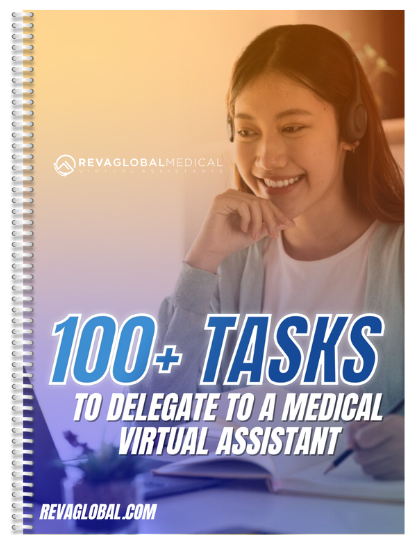
The Rise of Medical Virtual Assistants: Empowering Healthcare from Home

The healthcare landscape is rapidly evolving, with digital solutions
at the forefront of improving efficiency, reducing administrative
burden, and enhancing patient care. One such transformative innovation
is the medical virtual assistant (VA)—trained professionals who
support clinics, practitioners, and healthcare teams remotely. As the
demand for healthcare services grows and operational complexities
increase, a new wave of medical VAs with medical backgrounds are
proving invaluable, combining clinical know-how with the convenience
and flexibility of working from home.
This blog post will explore how medical virtual assistants are
changing the game for doctors, practitioners, and clinics. It will
highlight the unique advantages of employing VAs who have medical
training, the practical requirements for integrating virtual
assistants into a practice, and real-world examples of how they
elevate patient satisfaction and provider efficiency.
What Is a Medical Virtual Assistant?
A medical virtual assistant is a remote professional, often with
healthcare training, who provides a range of administrative and
clinical support services suited to the needs of healthcare providers.
These services often include:
– Medical scheduling and calendar management
– Patient communications (appointment reminders, answering queries, etc.)
– Insurance verification and billing support
– Data entry and management of electronic health records (EHR)
– Assisting with medical research or clinical documentation
Unlike general virtual assistants, medical VAs are equipped with
specific knowledge of medical terminology, workflow, and sensitivity
to patient privacy and regulations like HIPAA.
The Growing Need for Medical VAs in Modern Healthcare
Healthcare professionals, especially doctors and clinic managers, face
mounting administrative workloads. According to KeyReply, it’s nearly
impossible for doctors to personally handle every patient need amid
packed schedules and ever-increasing paperwork. This is where medical
virtual assistants shine. By seamlessly handling tasks that otherwise
consume precious physician time, VAs help free clinicians to focus on
what matters most: patient care.
Additionally, the COVID-19 pandemic accelerated the shift toward
telemedicine and remote work across all sectors, including healthcare
administration. Medical VAs, uniquely suited to work-from-home
environments, are now an essential asset rather than a novelty.
Why Hire Medical Virtual Assistants with a Medical Background?
While anyone can be trained in basic admin tasks, medical virtual
assistants with a formal medical background bring specialized value:
1. Enhanced Communication and Understanding
Medical VAs who’ve worked in healthcare settings or have clinical
training can communicate more effectively with providers and patients,
accurately interpret medical terminology, and grasp the nuances of
clinical workflows. This means fewer costly errors and less time spent
clarifying simple requests.
2. Improved Accuracy in Data Management
Keeping up with electronic health records and patient data requires
rigorous attention to detail. As highlighted by HR Future, trained
medical assistants ensure the integrity of healthcare data, minimize
input errors, and understand the importance of maintaining patient
privacy.
3. Elevated Quality of Patient Interactions
When patients interact with staff who are knowledgeable about medical
conditions, terminology, and office procedures, their satisfaction
increases. Miscommunications or delays are far less likely, supporting
a seamless patient journey from first contact to follow-up care.
4. Proactive Support in Clinical Tasks
Medical VAs can assist with compiling and summarizing research
articles, keeping practitioners up to date with the latest studies and
clinical guidelines. This academic support can directly impact the
quality of care delivered to patients.
Key Benefits for Doctors, Practitioners, and Clinics
1. Reduce Administrative Burden
Medical VAs can process insurance forms, manage appointment logistics,
and handle patient queries, resulting in substantial time savings for
clinical staff. According to KeyReply, this timely monitoring and
administrative support allows care teams to serve more patients
without burning out.
2. Scalability and Cost Efficiency
One VA can support multiple doctors or departments, scaling with
demand without the overhead of additional office space or equipment.
The cost of hiring a virtual assistant—especially one who works from
home—is generally much lower than that of an in-office staff member,
offering solid ROI as described in multiple industry reports.
3. Immediate, Real-Time Patient Interaction
Unlike traditional administrative staff who work fixed hours, medical
virtual assistants can often provide extended or even 24/7 coverage,
handling patient inquiries in real-time and giving instant responses—a
critical factor in patient satisfaction, particularly for urgent
requests (KeyReply).
4. Timely Insurance and Billing Assistance
Navigating health insurance requirements and billing can be a headache
for patients and clinics alike. VAs trained in insurance processes can
resolve eligibility, claims, and authorization questions swiftly,
smoothing the revenue cycle.
5. Foster a Healthier Work-Life Balance for Providers
By offloading non-clinical work, medical virtual assistants enable
providers to spend more focused time with their patients and maintain
a healthier work-life balance—a factor shown to improve job
satisfaction and reduce burnout among healthcare practitioners.
What Does It Take to Be a Medical Virtual Assistant (Work from Home)?
Qualifications and Skills
To work as a medical virtual assistant from home, candidates typically need:
– A high school diploma (at minimum)
– Completion of a medical assistant program (strongly preferred)
– Prior work experience in medical administrative roles
– Comfort with electronic medical records (EMRs), telemedicine
platforms, and digital communication tools
– Strong communication and organizational skills
While certification (such as CMAA—Certified Medical Administrative
Assistant) is not mandatory, certified professionals often stand out
in the job market and inspire greater confidence among employers
(MedAssisting.org).
Essential Home-Office Setup
Medical VAs must be equipped with a secure, HIPAA-compliant
workspace—with reliable high-speed internet, up-to-date computer
systems, and necessary peripherals. They should also receive regular
training on privacy and data security best practices.
Integration Tips for Clinics and Providers
Interested in leveraging medical virtual assistants for your practice?
Here’s how to ensure a smooth transition and integration:
1. Define Roles and Expectations
Clarify the VA’s responsibilities—whether it’s appointment setting,
EHR management, billing, patient communications, or assisting with
telehealth workflows.
2. Leverage Cloud-Based, HIPAA-Compliant Tools
Use secure platforms for email, chat, file sharing, and practice
management to streamline collaboration and ensure compliance.
3. Provide Comprehensive Onboarding
Offer access to your office protocols, digital resources, and clear
instructions, just as you would with in-person staff. Regular
check-ins and feedback sessions help align VA performance with
practice goals.
4. Encourage Continuous Learning
Healthcare evolves quickly. Support your VA’s professional development
with ongoing training in both administrative and clinical best
practices.
Streamline your practice with a Medical Virtual Assistant
By utilizing a Medical Virtual Assistant, you can free up your time and ensure that your medical practice operates efficiently
Success Stories: Medical Virtual Assistants In Action
Case Study 1: Streamlining Patient Intake and Follow-up
A busy family medicine clinic faced persistent bottlenecks in patient
intake, leading to missed appointments and delayed follow-ups. By
delegating these tasks to a trained medical virtual assistant, the
clinic improved punctuality, reduced no-shows, and enabled nurses and
physicians to spend more time on direct patient care. Patient feedback
surveys registered significant gains in overall satisfaction within
months.
Case Study 2: Insurance Claims Management
An orthopedic practice struggled with denials and delays in insurance
reimbursement. The addition of a virtual assistant with expertise in
insurance verification and medical billing resulted in a sharp
decrease in claim errors, quicker payment turnaround, and lower
administrative costs.
Case Study 3: Telehealth Expansion
During the pandemic, a mental health group rapidly scaled its
telehealth offerings but needed help with scheduling and follow-up. A
medical VA working from home managed all patient communications,
confirming appointments and following up post-session. The streamlined
workflow enabled the practice to handle double the caseload without
increasing on-site staff.
Looking Ahead: Future Trends in Medical Virtual Assistance
The role of virtual assistants in healthcare will only grow as
technology advances. Artificial intelligence and automation will
augment human VAs, enabling even more efficient triage, documentation,
and patient engagement. Nonetheless, the combination of medical
knowledge, empathy, and administrative acumen will remain
irreplaceable traits for top-tier medical VAs.
Conclusion: The Strategic Advantage of Trained Medical Virtual Assistants
For doctors, practitioners, and clinics, the advantages of working
with medical virtual assistants—especially those with a clinical or
medical background—are substantial. By reducing administrative
burdens, ensuring data accuracy, enhancing patient experiences, and
providing cost-effective scalability, medical VAs working from home
represent a strategic investment in both practice productivity and
patient care.
As you consider the next step toward optimizing your practice,
remember: hiring a trained medical virtual assistant isn’t just about
saving time—it’s about delivering smarter, more responsive healthcare
in an increasingly connected world.
Ready to empower your practice? Connect with our team to find your
trained medical VA today!
Schedule Your Strategy Session!
Grow Your Brand With Trained Virtual Assistants
Get the help you need to take your brand and business to the next level.
Not Sure What Tasks To
Start Outsourcing?
We’ve got you covered.
Download our free guide to help you get started.